Tuesday, 28 July 2020
A New Zero-Waste Market is Here!
Wednesday, 8 July 2020
Lets Compost!
This post is a summary of how to start composting. For a thorough and detailed guide, check out edmonton.ca/compost.
Composting is reusing your waste and turning it into useful decayed organic matter. This is the stuff you can mix with your garden soil to provide your plants and flowers with rich nutrients. Home-produced compost will enrich soil and reduce the need for chemical fertilizers for your garden. Reduce the amount of organic waste that ends up in the landfill and have a blooming and healthy lawn and plants during summer, it’s a win-win!
Food scraps that end up at the bottom of landfills, decay in an environment that has no oxygen present. Lack of oxygen promotes formation of methane gas, which is a harmful greenhouse gas that is 26 times more potent than carbon dioxide. However, composting is done in the presence of oxygen. So, food scraps that are composted in your backyard will instead release carbon dioxide (like it should in the natural carbon cycle). Carbon and nitrogen also stay in the finished compost and are great for the health of your garden.
Thinking of giving composting a try? This is what you can do:
Purchase or Make a Compost Bin
The bin should have enough holes for air to pass through. This how to guide has a number of styles to choose from. For more information on composters, visit edmonton.ca/compost.
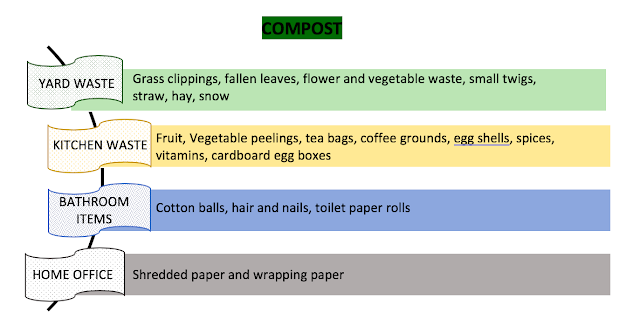
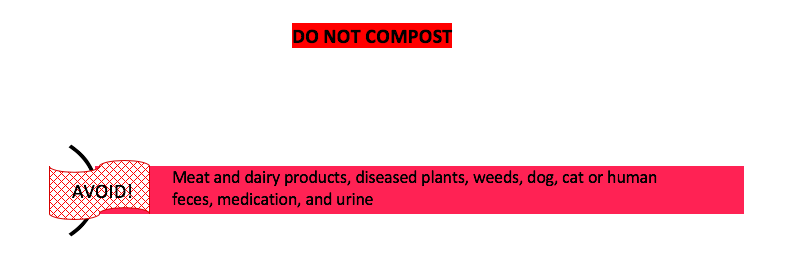
Learn What to Compost
Image Credit: Radhika
Get Started
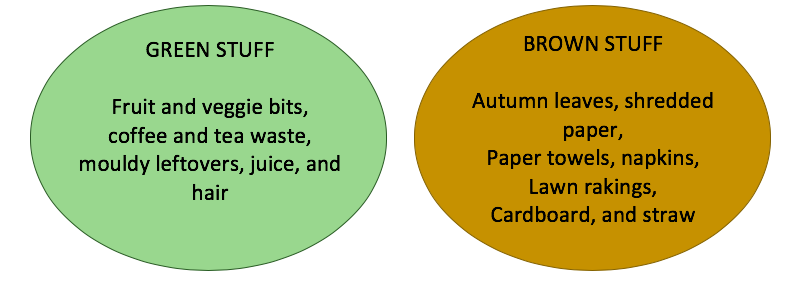
Now, composting is pretty easy. It should have a good balance of green stuff (nitrogen) and brown stuff (carbon).
Image Credit: Radhika
Put a layer of brown stuff at bottom to start. Alternate between putting a layer of green stuff and then brown stuff. Make sure clumps are broken into small pieces. Mix fresh material in with the layer below. Add water to the bin, if it is too dry. Make sure your compost is turned or fluffed once every week or so.
Troubleshooting
If your compost runs out of oxygen it can start to smell. Make sure it is getting enough air by fluffing compost and breaking up clumps.
Nitrogen is rich in moisture, so too much nitrogen can lead to a very wet and stinky compost. Whereas carbon is dry, so too much carbon will lead to a lack of moisture needed to decay waste properly. So the key is to have a good balance. If compost is too wet, add more brown material and aerate. If compost is too dry, add more green stuff or some water.
In winter, to protect the compost from excessive moisture, the bin can be moved to the garage or a shed. If compost is kept outside in winter, it should receive some sunlight whenever it can. It can also have straw bales stacked around the bin to provide it with some insulation.
A Fun Alternative to Outdoor Composting:
Not everyone can compost in their backyards or patios. Vermicomposting is a good alternative. Vermicomposting uses red wiggler worms, as they are incredible garbage eaters and they produce rich compost. All you need is a small bin with a few red worms and your food waste. Oh, and worms also speed up the decaying process so it’s a win-win-win!
You can reuse a plastic bin for vermicomposting with small sized holes in the top for airflow.
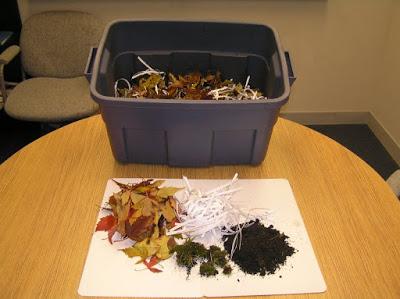
For vermicomposting, add newsprint torn into long strips to your bin. You can also include small amounts of potting soil, along with straw, dried leaves, dry houseplants and crushed eggshell to your container. This bedding will ensure your worms’ proper health. After the bin is full of these materials, sprinkle it with some water so it is as damp as a wrung out sponge. Add your worms. Now you can start feeding the bin and worms with green scraps (fruit, vegetables, plant leaves), make sure to use a different part of the bin each time you feed them.
Vermicomposting bin with the bedding Source: edmonton.ca/wormcompost |
After about three months, the original bedding will have decreased in size. At this point compost can be harvested and new bedding can be added for the cycle to repeat (leaving the worms in the bin)!
If you want to use worms for your outdoor composting, brown earthworms eat organic waste in gardens. Red wiggler worms can’t survive our climate, which is why they are used in indoor composting.
Final tips!
Compost should stay as wet as a wrung-out sponge.
Worms like to be at room temperature.
Keep compost bins on bricks to leave room at the bottom for air to circulate.
You can store food waste under the sink in a bin throughout the day and throw it in your compost pile all at once.
Submission by Radhika (Volunteer)
Thursday, 2 July 2020
The Power is Yours!
![]() |
| Graphic by Charlene |
![]() |
| Graphic by Charlene |
Low-Impact Dusting
*not scientifically proven
I’ve found vacuuming tends to leave a trace amount of dust behind, that's particularly noticeable on hard surfaces. So I utilize a few tools that don’t produce the waste involved with disposable dusting products:
- reusable container
- cloth that’s not too fancy
- small amount of tap water
Cardboard Creativity
Have you discovered a great way to reduce, reuse and save?
Please leave us a comment and share your ideas for supporting the environment!
Wednesday, 17 June 2020
Chef Saves
- Use left-over veggie scraps to prepare a nice and healthy broth. Save up odds and ends of vegetables whenever you chop and cook with them. When you have enough scraps, throw everything in a pot and add water, stir and bring to a light boil. Then strain the mixture and store the broth in jars in your freezer.
- Bake or stir fry potato skins, add some cheese and serve as a side dish. This one is my husband’s favorite dishes.
- Another common ‘waste’ in our kitchen is stale bread and bread crusts. I make bread crumbs with these: I put them into a food processor, pulse them and store the crumbs in a jar for future use.
- I used to throw away more than half of my fresh herbs - coriander, parsley, and mint leaves - but have learned a great way to store them for longer use. I chop the leaves and freeze them in an ice cube tray. As I need them, I take them out to defrost, and use.
- My mother has beautiful indoor plants and credits this success to used tea leaves. Once tea is prepared, the steeped tea leaves (not containing sugar or dairy) are placed directly in the pot. The plants benefit from the extra nutrients.
- Did you know that some tea bags have plastic in them? Steeping loose tea leaves in boiling water is the best way to avoid the added plastic.
- Use coffee grinds as a deodorizer in the trash can or refrigerator. You can also spread them in your yard as a natural pest-repellent.
- Lemon and orange peels make great scrubs for your face and body. Dry the peels and grind them to make a fine powder and use it as a scrub. Some people also make facial creams with orange peels.
- Banana peels are rich in nutrients, so instead of throwing them away, try adding them to smoothies and shakes. You can also mix them in flour and bake or fry them for a tasty snack. You can use ripe banana flesh as a face mask for a soft and fresh look.
- Instead of throwing away bruised fruit, toss them into a salad or make popsicles.
Thursday, 4 June 2020
DIY Spring Cleaning and Reusing
- ½ cup of 3% hydrogen peroxide
- 4 tbsp white vinegar
- 2 tsp non-bleach laundry detergent
- ½ cup of fabric softener
The carpet shampoo can be used for deep cleaning carpets and couches.
- ½ cup lemon juice
- 2 cups of white vinegar
- 1 cup water
- 1 cup white vinegar
- 1 tbsp olive oil
![]() |
| Image of the duster halfway complete |
![]() |
| The finished duster ready to be used |
Lastly, I finish shampooing the carpet in my room and cleaning any glass or mirror surfaces with a glass cleaner and flyer papers or newspapers.
- 7 cups of water
- ½ cup of baking soda
- ⅓ cup lemon juice
- ¼ cup white vinegar
My mom sewed her own cushion covers from old bed sheets.
| DIY cushion covers from old sheets |
![]() |
| I turned my bookshelf into a bench |
I would really encourage this season for everyone to get creative and work with the things you already have at home. It can be a challenge but there are a lot of resources on our Reuse-It blog and Pinterest page on reusing items to create something you need. Share your reuse creations and recipes in the comment section below!
Thursday, 5 March 2020
2020 Family Day Festivities at the Reuse Centre
![]() |
| Image: Brother, Grandpa, and DIY wind chime |
Another cool thing we made were envelopes out of old calendars. There were many options for types of calendars; I picked the calendar with European buildings and my brother picked an animal-themed calendar.
![]() |
| On the left is the envelope that I made and on the right is the envelope my brother made. Calligraphy by the Edmonton Calligraphic Society |
Follow City of Edmonton Reuse Centre on Facebook to stay informed about monthly, family-friendly events.
Monday, 24 February 2020
Reuse Centre: A Wedding Store
For this post, I will share some wedding decor ideas, and create wedding items from materials at the Reuse Centre. You might ask, "What can I possibly get there that I can use for a wedding?" So, I'm going to show you a few easy projects you can do to not only save money (only $5 per 25 kg), but also help you reduce waste created from planning your special event.
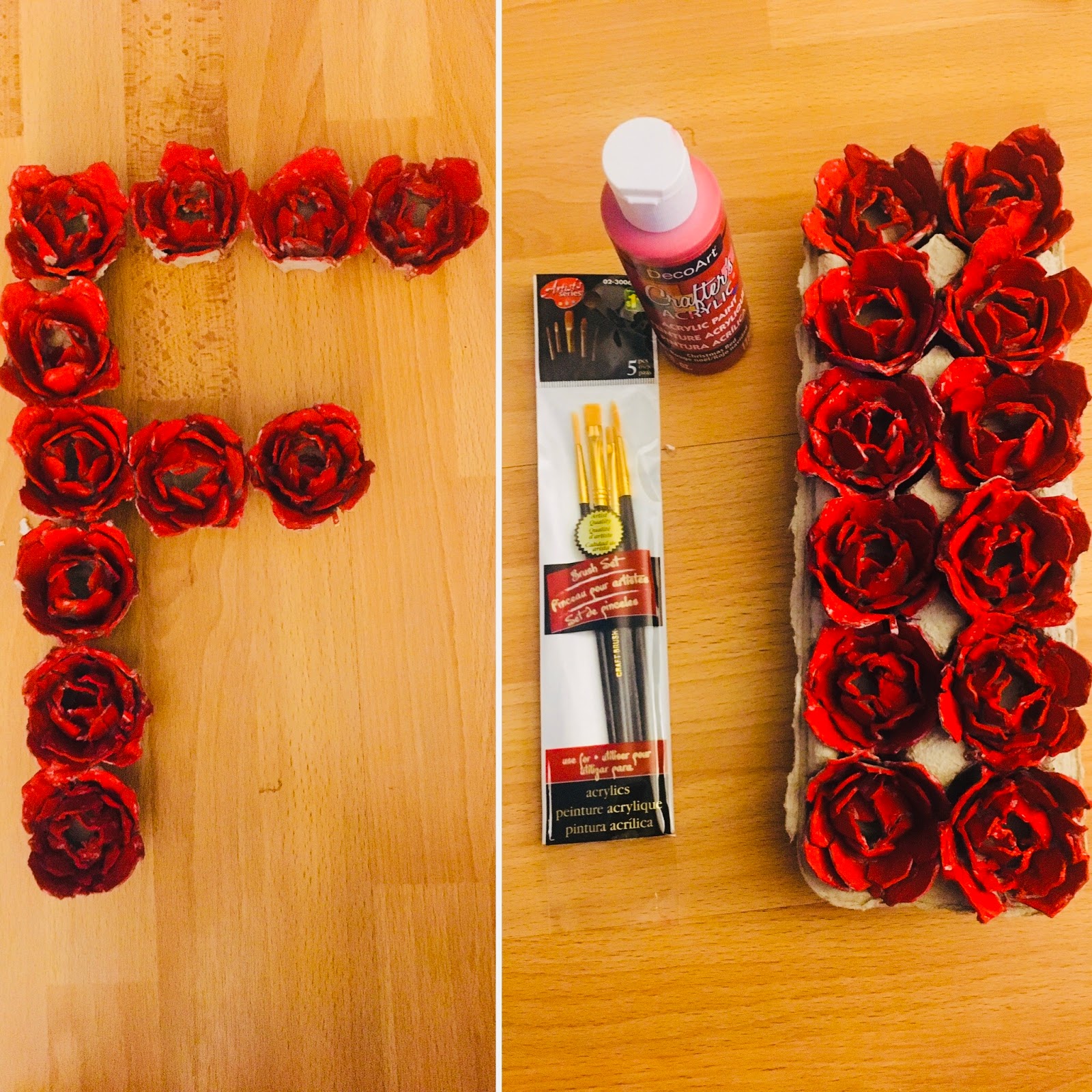
Paper flowers have slowly been taking the place of balloons, which is awesome since balloons end up in landfills. Instead of using card stock, you make roses out of the egg cartons.
![]() |
| It took me one carton to make five roses and other flowers |
![]() |
| Hand-painted each rose with red acrylic paint. (I think they turned out eggcellent!) |
Instead of buying a box of jars for your candy buffet, check out the Reuse Centre for an amazing variety of tin cans, bottles, and jars. Start collecting empty containers from your own home. Take the labels off, wash thoroughly and voila, you have candy containers! Baby food jars are perfect for holding wedding favours such as mints, tea leaves, plant seeds, etc.
![]() |
| To these cute napkin rings |
There is not much to say here. Simply cut the rolls to the desired size and paint in the colours of your choice.
6. Books used as centerpieces
I saved the best for last. Honestly, this is something I wish I had thought of when I got married: using books as centerpieces.This idea is genius because I can't think of a more personal centerpiece than books specifically picked by the couple according to their tastes or motif. Not only that, but having books as centerpieces eliminates the need for wedding favours because the guests can bring home whichever book they want. There will be zero waste with this idea. I mean, what more can guests ask for? Food. Party. Books.
So, there you have it, just a few ideas for you! I'm sure once you enter the Reuse Centre and see all of the items in there, your mind will light up with other projects. Please comment with your own Reuse Centre ideas or creations.
Enjoy planning!