Showing posts with label Waste Reduction. Show all posts

Wednesday, 8 July 2020

Lets Compost!

This post is a summary of how to start composting. For a thorough and detailed guide, check out edmonton.ca/compost. 


Composting is reusing your waste and turning it into useful decayed organic matter. This is the stuff you can mix with your garden soil to provide your plants and flowers with rich nutrients. Home-produced compost will enrich soil and reduce the need for chemical fertilizers for your garden. Reduce the amount of organic waste that ends up in the landfill and have a blooming and healthy lawn and plants during summer, it’s a win-win!


Food scraps that end up at the bottom of landfills, decay in an environment that has no oxygen present. Lack of oxygen promotes formation of methane gas, which is a harmful greenhouse gas that is 26 times more potent than carbon dioxide. However, composting is done in the presence of oxygen. So, food scraps that are composted in your backyard will instead release carbon dioxide (like it should in the natural carbon cycle). Carbon and nitrogen also stay in the finished compost and are great for the health of your garden.


Thinking of giving composting a try? This is what you can do:


Purchase or Make a Compost Bin


The bin should have enough holes for air to pass through. This how to guide has a number of styles to choose from. For more information on composters, visit edmonton.ca/compost.


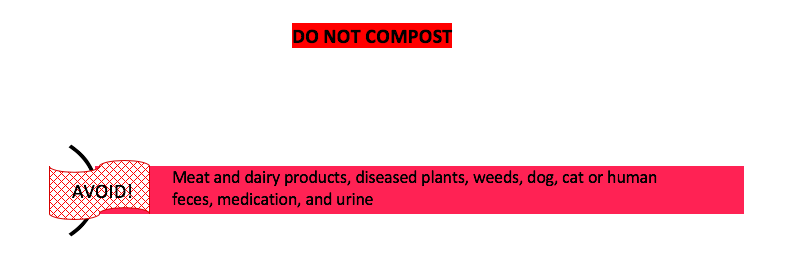
Learn What to Compost
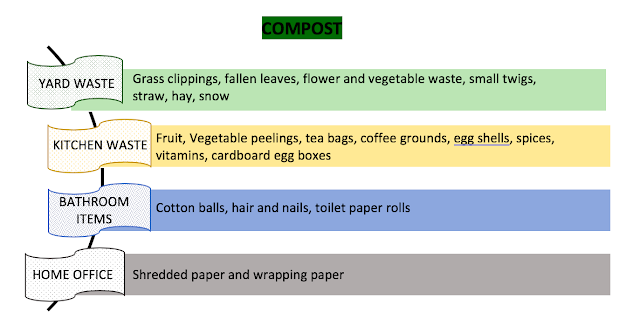
Image Credit: Radhika


Get Started


Now, composting is pretty easy. It should have a good balance of green stuff (nitrogen) and brown stuff (carbon).
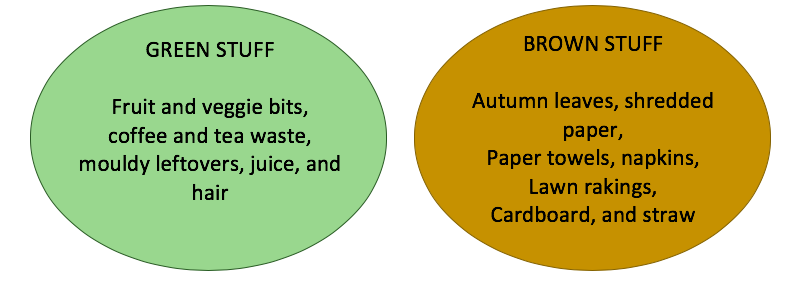

Image Credit: Radhika


Put a layer of brown stuff at bottom to start. Alternate between putting a layer of green stuff and then brown stuff. Make sure clumps are broken into small pieces. Mix fresh material in with the layer below. Add water to the bin, if it is too dry. Make sure your compost is turned or fluffed once every week or so. 


Troubleshooting


If your compost runs out of oxygen it can start to smell. Make sure it is getting enough air by fluffing compost and breaking up clumps. 


Nitrogen is rich in moisture, so too much nitrogen can lead to a very wet and stinky compost. Whereas carbon is dry, so too much carbon will lead to a lack of moisture needed to decay waste properly. So the key is to have a good balance. If compost is too wet, add more brown material and aerate. If compost is too dry, add more green stuff or some water.


In winter, to protect the compost from excessive moisture, the bin can be moved to the garage or a shed. If compost is kept outside in winter, it should receive some sunlight whenever it can. It can also have straw bales stacked around the bin to provide it with some insulation. 


A Fun Alternative to Outdoor Composting:


Not everyone can compost in their backyards or patios. Vermicomposting is a good alternative. Vermicomposting uses red wiggler worms, as they are incredible garbage eaters and they produce rich compost. All you need is a small bin with a few red worms and your food waste. Oh, and worms also speed up the decaying process so it’s a win-win-win!


You can reuse a plastic bin for vermicomposting with small sized holes in the top for airflow. 


For vermicomposting, add newsprint torn into long strips to your bin. You can also include small amounts of potting soil, along with straw, dried leaves, dry houseplants and crushed eggshell to your container. This bedding will ensure your worms’ proper health. After the bin is full of these materials, sprinkle it with some water so it is as damp as a wrung out sponge. Add your worms. Now you can start feeding the bin and worms with green scraps (fruit, vegetables, plant leaves), make sure to use a different part of the bin each time you feed them.
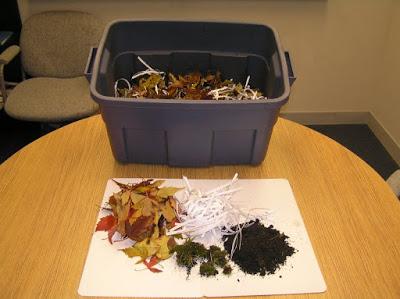


Vermicomposting bin with the bedding

Source: edmonton.ca/wormcompost


After about three months, the original bedding will have decreased in size. At this point compost can be harvested and new bedding can be added for the cycle to repeat (leaving the worms in the bin)!


If you want to use worms for your outdoor composting, brown earthworms eat organic waste in gardens. Red wiggler worms can’t survive our climate, which is why they are used in indoor composting.


Final tips!

  • Compost should stay as wet as a wrung-out sponge. 

  • Worms like to be at room temperature.

  • Keep compost bins on bricks to leave room at the bottom for air to circulate.

  • You can store food waste under the sink in a bin throughout the day and throw it in your compost pile all at once.


Submission by Radhika (Volunteer)

Thursday, 2 July 2020

The Power is Yours!

I've never been a big fan of practices that are considered wasteful or that may be harmful to the environment.  Maybe that's because I grew up watching Captain Planet guard the earth and The Raccoons protect the forest.  I was taught to be aware of pollution and to be a good global citizen by putting litter in its place. 
Graphic by Charlene

As a kid, I was lucky enough to participate in programs and initiatives that supported the environment.  I took school field trips to logging sites, where we helped forestry services with tree planting.  I still remember how exhilarating it felt to physically place those tiny, baby trees in their new earthy homes.  I thoroughly enjoyed the fresh air, exercise, and the opportunity to make a difference.   

Since the invention of the internet, it has become exponentially easier to learn about and discuss our impact on this earth.  Knowledge is being shared across the globe every day.  While this has certainly been helpful, it's also made it clear that there's so much more work to be done. 

Graphic by Charlene

There are many simple and accessible changes that I’ve made to lessen my impact on our planet.  When I learn a new way to complete an everyday task that presents an environmentally-friendly alternative to the norm, I try to adjust my lifestyle.  I'd like to share a few practices that I've adopted.


Low-Impact Dusting


Let’s face it, dust bunnies are everywhere!  They congregate in corners and hide behind doors.  If you’re not careful, they invite all their friends and family over for a party.  My house regularly hosts conventions for a small army of the biggest dust bunnies known to man*.
*not scientifically proven

I’ve found vacuuming tends to leave a trace amount of dust behind, that's particularly noticeable on hard surfaces.  So I utilize a few tools that don’t produce the waste involved with disposable dusting products:
  • reusable container
  • cloth that’s not too fancy
  • small amount of tap water
For the container, I typically rinse and reuse a small plastic butter/margarine tub, but you could use the dish or bucket of your choice.  If you don't have the right container at home, the Reuse Centre carries an assortment of types and sizes, based on donations.  Reusable cloths are widely available, and there are many DIY options too.  For example, old holey t-shirts can be cut up into small squares, or you may already have a selection of dishcloths ready for retirement.  Face towels are good options too.  If you choose a reusable cloth, the impact can be further minimized by removing/rinsing as much dirt or grime as you can using your water bin, then tossing the cloth into a wash cycle with other clothes.  When I'm done dusting, I "donate" the dirty water to my compost farm!


Cardboard Creativity


I prefer cardboard to plastic, but end up with a lot of it at home!  I've begun shredding smaller packages and spreading them in my compost farm.  For those without compost worms, cardboard containers make great reuse!  Think... wrapping for presents, packaging for parcels, even everyday organization around the house.  Use cardboard to separate drawer contents and keep small objects contained.  Cardboard boxes are also great if you plan to move!


Have you discovered a great way to reduce, reuse and save?  


Please leave us a comment and share your ideas for supporting the environment!


Submission and artwork by Charlene (Volunteer)

Thursday, 28 November 2019

Smash those pumpkins

Pumpkins ready to be smashed

Halloween is over, and so is the pumpkin season. What did you do with your Halloween pumpkins? Have you ever considered reusing them to have a smashing good time?

The City of Edmonton’s Compost ‘S Cool organized a free pumpkin smashing event on the afternoon of Saturday, November 2. People were invited to bring their Halloween pumpkins to smash and prepare for composting. Everyone had a great time and the event gets bigger every year. This year, 479 people smashed 518 pumpkins!

Composting is a natural process that breaks down organic kitchen and yard materials. Composting turns organic materials into a dark, earthy material called compost. Finished compost improves soil and helps make your plants, garden and lawn healthier. The pumpkins brought in by participants are put through the composting process and, after a few months, will be available as food for plants. During the event, volunteers helped  people make compost tea bags. The tea bags, made from coffee filters filled with a small amount of last year’s pumpkin compost and tied closed, can later be soaked in water and used to water plants.

Pumpkin compost being made into compost tea bags

The event was fun-filled, particularly for the young ones. To smash the pumpkins, participants could drop it from a set height, stomp on it to break it down into pieces, or  crush it with a long hammer. The most popular option for children, though - resulting in a long queue of eager participants - was attaching a pumpkin to a rope plant holder and swinging it into a tree or pillar. No matter the choice, every pumpkin smashing station was manned by Master Composter Recyclers to assist with the smashing and to ensure the safety of all.

Different and fun ways pumpkins were smashed

Volunteers then collected the smashed and broken pumpkin pieces into large heaps, mixed with leaves and straw, in preparation for composting.

Smashed pumpkins become compost

After all of this hard work, people warmed up with free hot chocolate provided by Compost S’ Cool.

If you are new to composting, you can learn more about the process and get useful tips and resources from Compost S’ Cool. They organize regular workshops and information sessions for members of the public. You can learn more here.

If you missed this year’s pumpkin smashing event, plan ahead for next year. If you have a soggy pumpkin or other food scraps to discard, find out if there is a Sharewaste compost site in your neighbourhood. Follow Compost ‘S Cool on Facebook to stay up to date with all of their upcoming events and workshops!

Photos and Submission by Sunanda (Volunteer)

Friday, 8 November 2019

Waste Reduction Week Canada (Oct 21-27)

Waste Reduction Week in Canada has again come and gone! 

For those that aren't familiar with this Canadian initiative, "Waste Reduction Week" (WRW) is an annual event to inform Canadians about the environment and social ramifications of wasteful practices. WRW was developed by a coalition of 13 recycling councils and sister organizations from across Canada and happens in the third week of October each year. WRW uses its “take action” messaging to empower all Canadians to adopt more environmentally-conscious choices and provides them with information and ideas to reduce waste in all facets of daily living. (https://recycle.ab.ca/wrw/)


This year Waste Reduction Week (WRW) tackled seven different subjects related to waste, with each day dedicated to one theme. 


In my opinion, WRW in Canada has done an excellent job in educating about the vast array of waste issues that are suffocating our planet these days. What I liked most about this week is how easy it was to share about the importance of waste reduction because the organization's website, useful information and infographics were so easy to access. What made it even more simple to share with others was the fact that it was an official Canada-wide initiative - which I feel super proud of my country for having - and made it so much easier to share with businesses and organizations, such as the private school I work at.

The topics highlighted are truly some of the most imperative and urgent waste issues. As WRW has dedicated each day to a topic, let's review all that was shared for each subject and learn about how we can reduce our waste!

1. Circular Economy. Developing a circular economy is so important because products are designed so that the resources used to make products can be reused and reinvested into new products over and over again.

Circular economy is different from recycling because during the initial stages of product design, purposeful reuse of the resources is planned into the system instead of finding a recycling solution afterwards. This mindfulness in the initial stages of production reduces inevitable waste at the end of that product lifespan and also avoids possible toxic or non-recyclable materials from ending up in landfills.

What can you do to support this? Check out these tips from WRW below:
  • Engage in products/services that use smart design and recycled materials
  • Prioritize access over ownership (e.g. consider borrowing or renting items that you don't need often)
  • Extend the life of materials through swapping, repairing/refurbishing
  • Support companies that offer take-back programs
  • Purchase refurbished products

2. Textiles. Fast fashion is one of the leading waste contributors and one of the top polluters of our environment. Factories of fast fashion companies often do not have proper water-treatment systems, resulting in the harmful dyes and chemicals leaking into rivers and streams where water is collected for household use. Additionally, sweatshops are known to underpay their workers and disregard safety regulations, making working conditions dangerous. These are the key messages from WRW on what you can do:


  • Practicing conscious consumption
  • Learning about the environmental impacts of clothing production
  • Repairing clothes before purchasing new
  • Repurposing clothes into new outfits and accessories
  • Extending the life of textiles through reuse: clothing swaps, shopping thrift, and donating clothes.

3. Champions & Innovators. This day celebrated communities, individuals, and organizations that are disrupting traditional business models to embrace waste reduction initiatives and making big gains in waste reduction.

Doesn't this sound just like... the Edmonton Reuse Centre?! Yes, yes it does! In this post, I'd like to commend the Reuse Centre for being a one-of-a-kind place in Edmonton Waste Services that promotes the ideas and benefits of reuse, provides affordable items to organizations and individuals, and thereby diverts waste from the landfill.

If you've never been or don't know anything about the Reuse Centre, they have a collection of a wide variety of materials, ranging from arts and crafts supplies, home decor, media, metals, needle craft supplies, office and school paper, plastics, wood, and various other items that are all sold by weight - meaning you can grab your goods for cheap!


Source: City of Edmonton 


4. Plastics and Packaging. It is well known that single-use plastics are one of the leading contributors to the world's waste problem, with our oceans and landfills drowning in it. We can all work towards reducing our plastic use and learn to dispose of items properly. Here are some key tips from WRW:


  • Make simple changes in your everyday life to reduce your plastic footprint. Every action counts.
  • Use circular economy principles in product design and business models to reduce plastic waste.
  • Learn about how plastic affects marine environments and how you can take action.
  • Learn how to reduce and reuse plastics in everyday life through WRW's online resources.
  • Find resources and links to other plastics awareness campaigns.

5. Food Waste. It's inevitable that households will produce food waste, but how much is too much? It doesn't make any sense that there are approximately 800 million people starving around the world, when the total world food production is more than enough to feed everyone. Food waste often happens in North American kitchens when food and produce in the fridge goes rotten - and this is something that can be completely avoided! WRW sets out simple guidelines to reduce food waste and asks those that are committed to take a pledge. Here are the tips suggested by WRW:
  • Learn about food waste in Canada.
  • Take action to reduce your food waste by:
    • Planning meals and making a grocery list.
    • Storing fruits and vegetables properly so they last longer.
    • Getting creative with leftovers.
    • Understanding the difference between best before and expiry dates.
Click here to take the pledge!


6. Swap, Share & Repair. Swapping, sharing, or refurbishing extends product/material lifecycles and diverts them from disposal. On Saturday of Waste Reduction Week, Canadians were encouraged to think about the lifecycle of their materials and learn more about sustainable consumption, the sharing economy, and extending the life of materials through reuse.

Keep in mind that this can be done anytime and anywhere! The best way to reduce and reuse waste IS to give your products a new life by trading them elsewhere and, in turn, receiving something new! Edmonton's thrifting, trade, and consignment scene has been growing, with new events and initiatives happening every couple of weeks, so this is a great opportunity for people to get out there and do some swapping and sharing!


7. E-Waste. E-waste has definitely been the focus in the past two decades as technology has become an essential part of everyday life. Did you know that globally last year, the total amount of electronic waste reached 44.7 million tonnes and only approximately 20 per cent was recycled? Our electronics are made from materials like chlorinated solvents, brominated flame retardants, PVC, heavy metals, plastics, and gases that could poison the environment if not recycled properly.


Source: City of Edmonton


WRW says that a majority of households have old electronics kicking around. Since most Canadian municipalities do not offer curb side e-waste pickup, many residents rely on collection events for proper management of these items. Organizations, schools, and municipalities were encouraged to host an e-waste collection event for reuse and/or responsible recycling during Waste Reduction Week. 

In Edmonton, we currently have 4 Eco Stations where you can drop off your electronics for FREE! How great is that?! 


If you are a resident looking to drop off your electronics at a City of Edmonton Eco Station, make sure you take a look at the guidelines for other acceptable/unacceptable items.


I hope this movement inspires you to be your own champion in reducing waste and in finding more ways to reuse the things in your life!


Until next time!

Submission by Jessica (Volunteer)

Friday, 27 September 2019

2019 Waste Reduction Hero

In early September, we had the opportunity to present this year’s Waste Reduction Hero Award at the Edmonton in Bloom awards ceremony. This was a special opportunity for us as we awarded one of our long-time volunteers.

Charlotte started volunteering at the Reuse Centre in November 2011. For eight years, Charlotte has sorted through materials donated to the Reuse Centre with a smile on her face or a story of joy to share with fellow volunteers, staff and customers. Charlotte began her volunteer work at the Reuse Centre through a partnership with Goodwill Industries of Alberta and later graduated from their program. She continues to volunteer independently and remains committed to her role as a citizen supporting sustainability within our community.


Charlotte is a great leader and mentor to her fellow volunteers. She takes personal ownership of contributing to the mission of the Reuse Centre each shift as she arrives with items to donate, whether it be gift bags, beautiful stationery, old calendars or jigsaw puzzles. Charlotte and her fellow volunteers have sorted more than 2 tonnes of items since the start of 2019. 

Over the last 8 years, Charlotte has volunteered close to 3,500 hours. She has made many friends over the years and customers and staff greatly appreciate her presence and strong work ethic.

We are grateful to all of our volunteers and the work that they help us do here at the Reuse Centre and in the community.

Interested in volunteering at the Reuse Centre? Check out our website to view current opportunities.

Vanessa (staff) 

Tuesday, 11 September 2018

5 Tips and Tricks Before You Thrift

Are you tired of your style? Would you prefer a more sustainable way to shop? Are your funds limited? If you answered yes to any or all of these questions, you're in luck! Thrift shopping is the answer to your fashion dilemma! However, before you go rushing to the nearest thrift store, here are five tips and tricks to guide you through thrift shopping.


                                                         Photo: Cindy Caturao


1. Set a Budget

Limit your spending! With prices reduced to almost half, sometimes even three quarters of the original price, it's quite easy to get carried away and buy clothes and furniture that you don't necessarily need. Ask yourself: Do I need it? Will I actually use it? Is it worth it? Setting a budget will help you to not only narrow down the things that you need but also keep your spending in check. 

2. Shop Around 

Edmonton offers a variety of consignment boutiques, thrift shops, and many second-hand stores. Various neighborhoods will also carry different items. I suggest going to multiple locations for an eclectic mix to shop from.

3. Sign up for memberships 

I understand, there is nothing more annoying than constantly receiving promotions, newsletters and just overall spam mail from different companies but sometimes it's worth it to subscribe. Occasionally, places such as Goodwill and Value Village will email members 40-50% off coupons. 

4. Shop with an open mind

Refrain from sticking to one area of the store. The beauty of thrift shopping is that most of the time, the items that you find are from the most unexpected sections of the store. Keep your options and selections ample and explore different areas of the store outside of your comfort zone!

5. D.I.Y.

Occasionally, you may find a garment that's not your ideal size or style. Making some quick and easy alterations allows you to see beyond the original purpose of the item. It opens up the potential and possibilities to reuse and repurpose garments. 

Thrift shopping is a sustainable way to dress without breaking the bank. It promotes reusing and repurposing garments that might otherwise end up in landfill creating more waste. Lessen your carbon footprint and shop at a thrift store. You never know what you might find!


                                                                                       - Cindy (Volunteer)

Thursday, 26 December 2013

Reuse tips to get you from Christmas to New Year

It's that time again - the season of peace, love, and the spirit of giving.  Unfortunately, it's also the season of increased waste and energy consumption.  Sometimes we get a little carried away during the holidays, but there are a few simple things that we can all do to make sure this season is merry and bright.


1) Whether it's after Christmas breakfast and you're heading out to visit family and friends, or it's Boxing Day and you're about to brave the shopping malls, remember to unplug your tree! The increased power usage for Christmas lighting is the equivalent of adding 300,000 homes to the province, just over the holiday season.  So do your part to lighten the strain, and don't light up your tree unless you're around to enjoy it.


2) My fellow volunteer, Michelle, gave us some great ideas for non-traditional ways to wrap our Christmas gifts. But the fact is no matter which way they're wrapped, once those gifts are opened you've got a mess of paper to deal with. My family typically recycles our used wrapping paper, but if I can find nice pieces without tape or crinkles I like to keep them to cover books and such. There are other creative ways that your Christmas wrapping can be reused, like origami tree ornaments or découpage.


3) You will always find a very small Christmas celebration at my house, but we always cook an absurd amount of food. What to do with the leftovers? How many days in a row can we choke down turkey sandwiches (not many)? Websites like "Love Food Hate Waste" offer great tips on how to get from Christmas to New Year by making the most of your leftovers and what's left of your spending money.


4) Finally, one of the best things you can do this Christmas is recycle your tree! Edmonton Waste Management has been picking up our Christmas trees from single-family residences, Eco Stations and Recycling Depots since 1990 for chipping and composting. Your old tree can help new trees and plants grow, and help keep our city beautiful.


Wishing you all a merry and reusable Christmas,

Nichole (Volunteer)

Tuesday, 17 December 2013

A Reuse Filled Christmas!

I love Christmas. Spending time with my family and friends means a lot to me. But as most of us know, the Christmas season is also a time of increased spending and waste production. But how much extra waste can actually come from one single day? I decided to do a bit of research, and found that in the two weeks after Christmas in 2012, the city of Edmonton collected 12 793 tonnes of waste and recyclables, compared to 5 666 the two weeks before. That’s over double the amount of waste! So I decided that this year I would try to reduce my impact on the environment, while also making creative and thoughtful presents and maybe even saving a buck or two.
I began my shopping (of course) at the Reuse Centre! What better way to reduce your impact than buying items that are in need of a second home? There I found all sorts of useful things, such as wine corks, frozen juice lids, Christmas cards, ribbon, puzzle pieces, paint and everything else I needed to make a list of meaningful Christmas gifts.
From here, I got to go nuts! Making your own Christmas presents means that the sky is the limit. You can go as far as your creativity is willing to take you! Here are a few ideas that I came up with:


This is a Christmas ornament is made from a frozen juice lid, a Christmas card, lace and sequins, all found at the Reuse Centre. I made a few different ones with different images, this one of a cardinal as well as Santa and a snowman. The craft was adapted from one I found on the Mrs.T's Christmas Kitchen blog.


This is a Christmas wreath made of a straw wreath frame, wine corks, ribbon and a bow. It was incredibly easy and great for the wine lover of the family! There's a step by step how-to instruction guide on the Save on Crafts blog.


This Christmas ornament is made from the other half of the card I used for the juice lid ornaments, puzzle pieces and paint. I made a craft like this as a kid, and I thought it would be nice to relive the memory! If you would like some direction, there is a nice tutorial on Lisa's Craft Blog.

These are just a few ideas of what you can do with the items found at the Reuse Centre, or any that you have saved for crafts. Next up are star shaped wall decorations made of magazines!
Not only did these gifts reduce my impact on the environment, but I have also spent a fraction of what I normally would on Christmas gifts (under $20 for all of these items and more!), and I have made presents that are unique and special to each one of my friends and family members. I am by no means an overly crafty or creative person, so if I can do this, anyone can! Where will your reuse filled Christmas take you?

- Leigh-Anna (Staff) is a program specialist for the City of Edmonton Waste Management Services and a Reuse Centre aficionado.


Friday, 22 November 2013

Reusing in Edmonton: Introducing the Edmonton Repairathon

You might be asking yourself, "What on earth is a repairathon?" right about now. They are neither a well-known nor widespread phenomenon, but when you finish reading this article, you'll be pleased as punch to have one in Edmonton.

I've been sewing for a long time. I have happy memories of pestering my poor mother while she made halloween costumes (she probably thinks of those times less fondly) and of making my first project - a small pillow. As an adult, I realized how valuable a skill sewing can be. I'm terribly short, you see, and the ability to hem my own pants rather than having to take them to a tailor saves me a lot of time and money.

I'm not an expert, by any means, but thanks to a lot of creativity and plain old stubbornness, I can get through most projects. Because of this, I was surprised when one of my best friends asked me to sew a button back onto her pants, claiming she didn't even know where to begin. I got curious; it turns out that a lot of people in my social circles don't have even basic sewing skills.

This is where the Edmonton Repairathon comes in. Taking cue from a group in Toronto, organizers set out to recruit volunteers who were interested in helping people prolong the life of their clothing. They will sew on buttons, stitch up seams, and patch holes. They'll even teach you how to do it, if you want. No RSVP is required, just show up with your item.

Project goals, from the group Facebook page
And get this: it's free.

I thought this was a great idea, and signed up to volunteer at their very first public event, which took place on October 27th. Prior to that, the group's founders had met up for a practice run where they fixed items for friends and family.

To be honest, no one was really sure what to expect. It was the first event, and though the Metro had run a short piece on the group, we had no idea how many people would show up or what the best way to organize the event would be. In the end, several stations were set up - about 5 volunteers on sewing machines, with several others ready to do prep and small hand-sewing tasks, and a few more at the doors to help greet people and direct them to whichever sewing station would best suit their needs.


I was blown away by the number of people who showed up, garments in hand. There was actually a line up, and we were forced to turn some latecomers away as we scrambled to finish what we'd already taken on! I think the most popular items brought in were coats or pants requiring a new zipper; we completely blew through our small supply of donated zippers and had a lot of trouble matching length and colour. For future events, customers must bring their own replacement zipper.

Unfortunately we did not get solid numbers regarding attendance or items repaired, but in two hours I stitched two seams, darned a hole in the back of a sweater, ripped out several zippers to help prepare garments for the machine-sewers, and chatted with patrons about the environmental and monetary benefits of repairing clothing rather than purchasing new. Multiply that by 13 volunteers, and you have a heck of a lot of good work!

The volunteers of the Edmonton Repairathon don't just donate their time and skill, but also their supplies! Buttons, thread, hooks sewing machines, and tools are all brought from home. Several volunteers also baked snacks to share with patrons. All in all, it turned out to be a really fun event, kind of like a big crafting circle. The next event is coming up this Sunday, November 24th, so come on down to get a few items repaired, learn a skill, and make some new friends in the process.

Check out the group's Facebook Page or email YEGrepairathon@gmail.com to learn how you can get involved or donate supplies, and to keep up on all their latest news.


-Sarah (Volunteer)